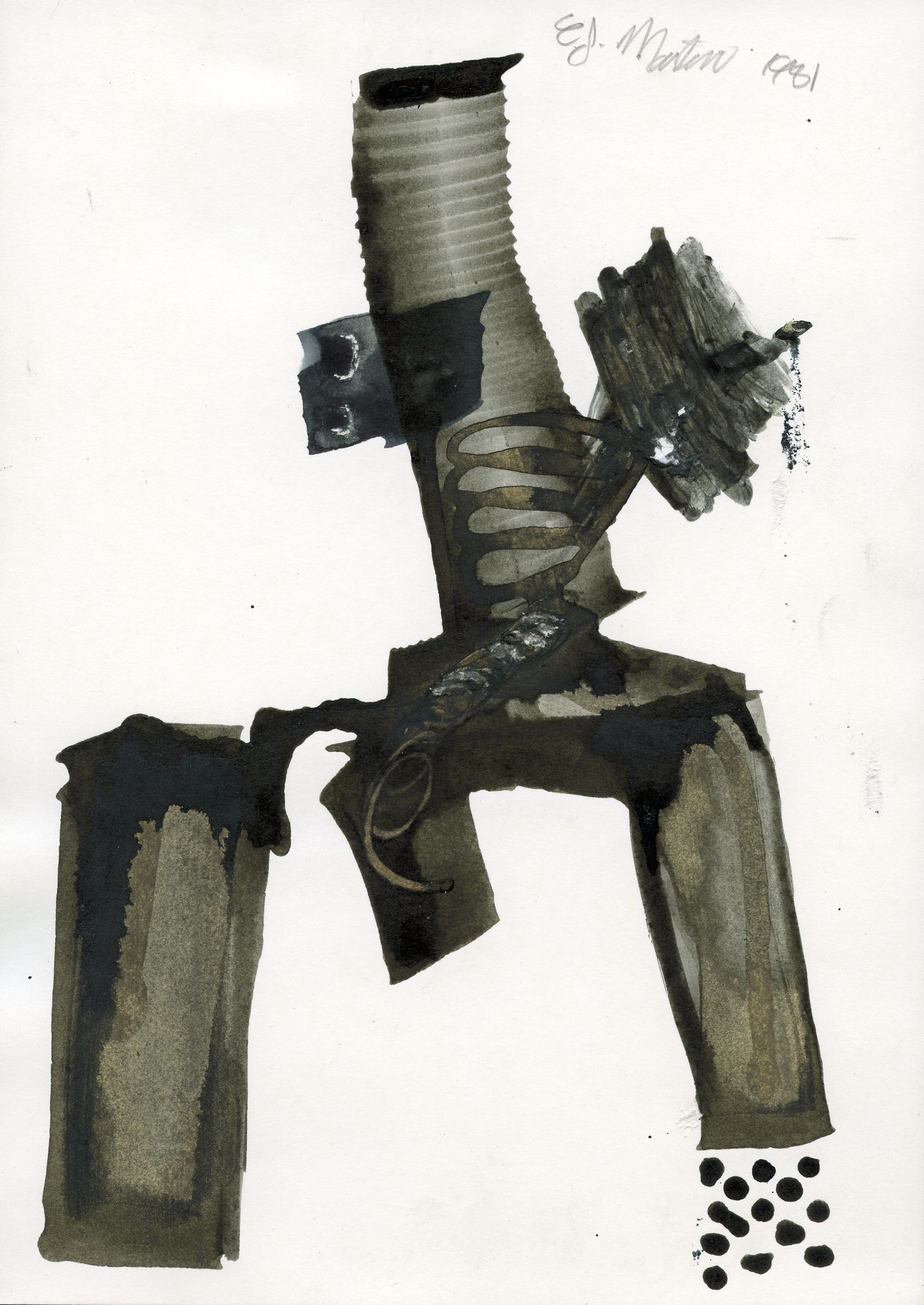
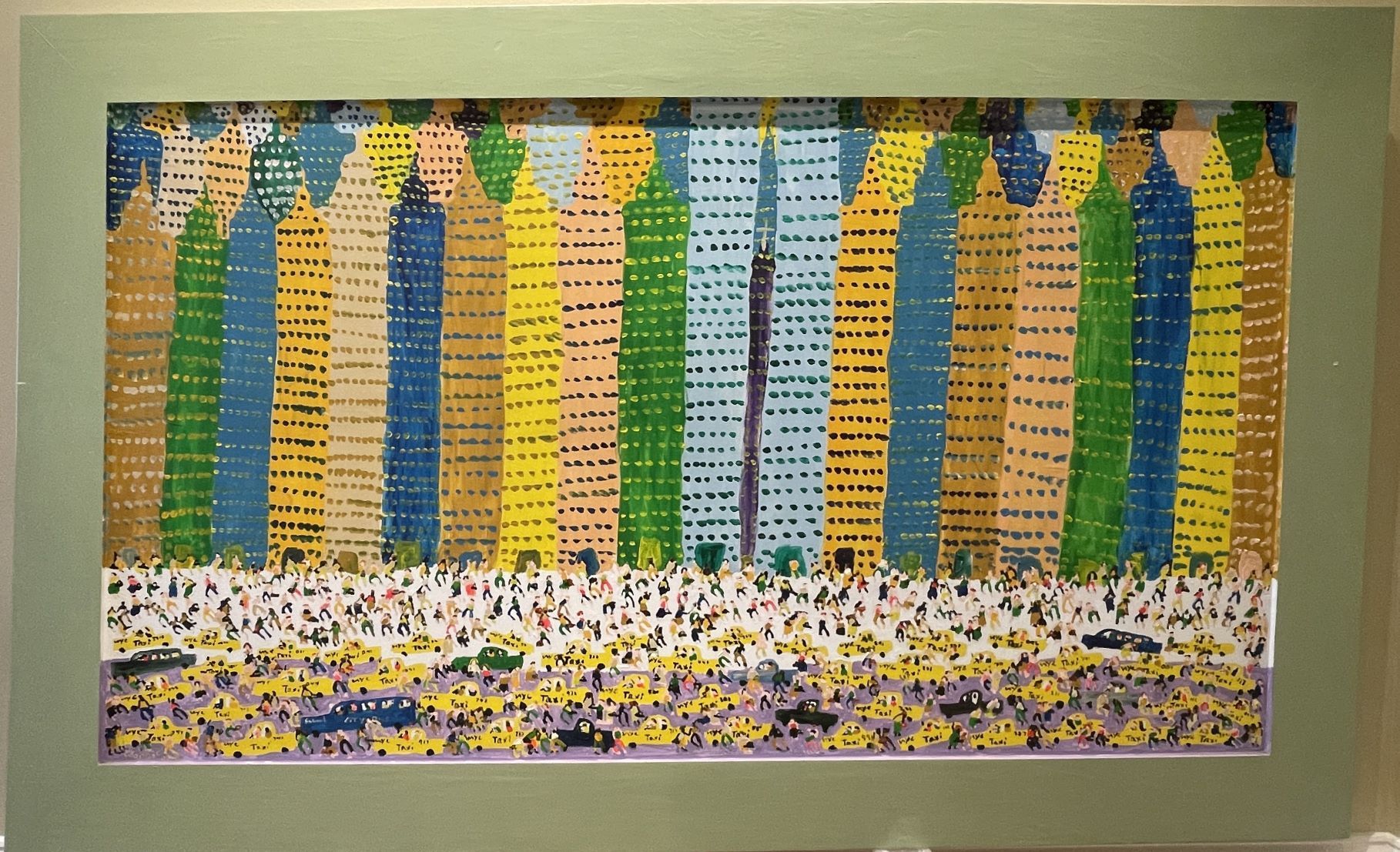
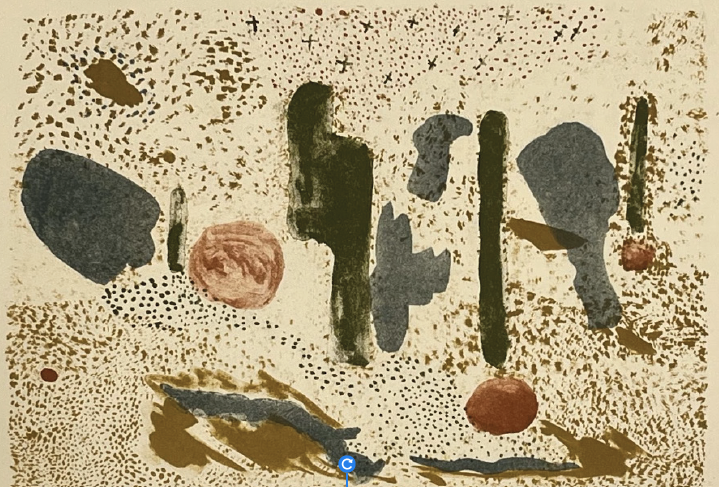
Eugene James Martin: Somewhere in Time explores the playful, lyrical, and deeply personal artistic practice of Eugene James Martin (1938–2005) whose work moves fluidly between abstraction and representation. Working across drawing, collage, and painting, Martin developed distinct bodies of work characterized by subtle humor, visual rhythm, and an inventive approach to composition. He described many of his works as “satirical abstracts” which include images that suggest recognizable forms and ideas while remaining grounded in abstraction.
Martin’s lifelong love of jazz is reflected in the spontaneity and improvisational quality of his drawings and paintings. His collages offer an especially fascinating window into his creative process. Often incorporating photographs, fragments, or even entire works from his earlier practice, these compositions bring different moments of his artistic life together in a single image. Martin called this approach “heterochronic collage,” creating works that contain multiple dates, signatures, and layers of his own artistic history. The exhibition brings together drawings, collages, and paintings created between 1968 and 2000, offering an overview of the range and evolution of his practice.
Born and raised in Washington, D.C., Martin later lived in Chapel Hill, North Carolina, before settling in Lafayette, Louisiana, in 1996 with his wife, biologist Suzanne Fredericq. Following a stroke and brain hemorrhage in 2001, Martin returned to painting after physical therapy and continued making work until his death in 2005. Today, his work is held in numerous public and private collections, including the High Museum of Art, LSU Museum of Art, Mobile Museum of Art, Ogden Museum of Southern Art, Ohr-O’Keefe Museum of Art, the Paul R. Jones Collection of African American Art, and the Schomburg Center for Black Culture.
Guest-curated by Paul Barrett, Somewhere in Time offers an opportunity to encounter Martin’s work across several decades and to consider the distinctive ways he engaged with his own artistic history. Through its title, the exhibition speaks to Martin’s tendency to collapse past and present, allowing earlier images, ideas, and moments to reappear in new configurations. Together, the works reveal an artist whose practice was at once humorous and contemplative, spontaneous and carefully constructed, and always engaged with the possibilities of abstraction.
An accompanying exhibition catalogue will be available for purchase at the Museum, offering visitors an opportunity to further explore Martin’s life, work, and artistic legacy.